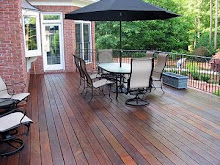
Deck Design Results From the Pros

The subjects listed below are discussed in length in a series of blogs written by the experts at Brazilian Wood Depot with help and contributions from hundreds of deck installation professionals. We have incorporated the feedback and experience of thousands of hardwood deck installations into these articles. The information offered here will:

Prevent poor or improper installation,
Save you money,
Give you lots of design ideas and
Help you choose the best accessories and hardware.

You can always call the pros at Brazilian Wood Depot too.

Choose a topic from the list on the right to display the articles related to your topic.

Wednesday, July 30, 2008

Best Decking Fasteners


Galvanized Nails are the most common choice for fastening pressure treated pine and cypress decking. These nails must have a coating guaranteed not to rot from the corrosive chemicals pumped into these boards meant to help fight rot and insects. As the Pressure treating industry changes chemicals to improve results, standards change to fight the changing corrosive properties that are introduced to the boards. This process has proven to be a game of “wait and see” if the nail coatings withstand the chemicals and prevent the nails from rotting.
Stainless Steel Screws are favored over nails because they do not rot or stain the wood and the threaded mechanics of screws offer much better holding power than nails. Galvanized nails are cheaper but stainless steel screws are worth the investment for a long lasting deck. Stainless Steel screws are not as hard as coated steel screws. Therefore, holes for these screws must be pre-drilled when installing superior hardwood decking products like Ipe (cumaru, tigerwood, Brazilian cherry and other) Brazilian decking choices and even composite decking. Smart-Bit by Starborn Industries is a drill bit that drills the perfect hole and counter-sink in one motion. Headcote SS screws have powder coat painted heads that virtually disappear when used on ipe, cumaru, tigerwood, Brazilian cherry and several other Brazilian decking species. GRK makes a SS trim head screw that also counter sinks nicely out of view because the BB sized head is so tiny. Ipe decking is so hard that even this small head can not be pulled through the boards.
Coated Steel Screws have the superior holding power over nails, cost less than stainless steel screws AND can actually be installed without the need to pre-drill holes. Many prefer to create a pilot hole when installing very hard ipe and cumaru Brazilian decking, which makes it easier to start the screw but the strength of these screws is still a handy attribute. GRK makes the same trim head screw in a coated steel screw, which counter sinks nicely out of view. These screws are still coated steel, which leaves the possibility of rust stains in the future.
Hidden Deck Fasteners like Ipe Clip and Deck Clip are also very popular because your deck can be constructed without any screws on the face of the boards. The screws are visible as you look down between the cracks in the boards but hidden deck fasteners are far LESS visible than face screwed boards. The Ipe Clip Extreme is a plastic coated stainless steel clip that slips into slots cut into the sides of deck boards. The stainless steel is an optimum material (over solid plastic clips) for hidden deck fasteners and the plastic coating covers the potential shine of stainless steel between the boards. The Deck Clip, made of aluminum and painted black is another favorite when installing premium ipe Brazilian decking. The thick aluminum is strong to last a lifetime and the black color (also on the screw heads) helps the clips disappear between boards. Ipe Clip Extreme screws are driven at a 45 degree angle and screw through one of the deck boards after going through the clip. The Deck Clip is driven straight down and does not penetrate either deck board that it holds. Therefore, the Ipe Clip Extreme will hold boards in place as they expand and contract and maintain uniform distance between boards after installation. The Deck Clip offers the advantage that you don’t need to run the screws through the deck boards, which negates the need to pre-drill. This is a time saving advantage. The aluminum clip should not be used in areas near salt water but hold up just fine for inland applications. Hidden deck fasteners made of 100% plastic do not hold up to weather and wear as well as these stainless steel and aluminum clips AND some of the plastic clips engineered for plastic on plastic contact squeak. This is a never-ending annoyance.
Hidden Fasteners Under Deck are also popular. Deckmaster makes a hidden deck fastening system that is mounted beneath the deck boards. Even when using one of the clip systems listed above, the Deckmaster fasteners can be used in areas where the clips can not – like steps, risers, start and end boards. They are available in powder coated steel for inland use and stainless steel for coastal areas. The only drawbacks to these fasteners are that the deck needs to be a workable distance from the ground and they require two people to install. One worker must hold the boards down as the other screws from the bottom. I suppose your St. Bernard could help if you could train him to stand on the right board. These fasteners are a great alternative to using plugs – they’re faster and adjustable. Once you’ve plugged premium decking like Brazilian ipe, you’ll never find them again.

Sunday, July 27, 2008

The Causes of Cupping Can Be Avoided

The Cause of Deck board Cupping is uneven moisture content from one side of the deck board to the other. If while looking at the end view of a decking board, the board is bent into a slight “U” shape, you are observing “cupping”. This uneven moisture is most often the result of poor ventilation or otherwise trapped moisture below the deck. This can happen while using PT decking, cedar decking or even ipe Brazilian wood decking.

Prevent Cupping for an above ground deck, observe these few simple steps:
• Be sure that the soil under the deck slopes away from the house and does not leave any contours that may puddle;
• Cover the soil with a vapor barrier which will prevent moisture from accumulating;
• Don’t allow any joists to contact soil (or lay flat on concrete if deck is built over an existing concrete patio). This will prevent moisture from wicking into boards, which will cause the decking boards to cup;
• Don’t allow any debris to accumulate under the deck which will hold moisture;
• Be sure that there is ventilation and sufficient clearance for air to flow from side to side under the deck – this is the most common cause of cupping;
• Standard S4S (not T&G) decking boards need to be installed with gaps between them. The gaps between PT boards will increase dramatically as the boards dry out while the gaps between Brazilian wood ipe decking boards will increase very slightly;
• Avoid fastening deck boards to any flat support that is more than half the width of the decking boards. If this is necessary, kerf and wax or finish the bottoms of these decking boards lengthways before installation.

Prevent Cupping when installing any type of ceiling under deck designed to create a dry living space underneath the deck. These caveats above should be observed and here are a few additional tips:

  • Of course, this “dry below” system should slope AWAY from the house;
  • It needs to be made of a material that will not hold moisture like aluminum or plastic;
  • The below ceiling should be suspended below and not in direct contact with deck joists or otherwise designed so that the deck joists are not in contact with standing water. This will prevent the joists from wicking up moisture. Rainaway.com offers a system that is engineered to achieve this moisture control;
  • Ample ventilation and air flow from front to back AND side to side under the decking boards is crucial and sometimes difficult to engineer given the small amount of clearance available;
  • Small vents along the house in the deck boards or the ceiling can aid ventilation;
  • We also recommend bottom kerfing (grooving) the boards with 3 grooves (for 5.5" boards) equal distance apart from one end of the board to the other and half the thickness of the board deep.  This will prevent the boards from having the muscle to cup.


Cupping versus Warping - Cupping is not caused by inadequate drying while manufacturing the decking boards. Cupping is caused by moisture trapped below decking boards. Inadequate drying of decking boards will cause warping. Warping and twisting of boards occurs as the boards’ internal moisture content acclimates to their new climate. The solution to this dilemma is to replace the boards.

Other Factors That Affect Cupping - Cupping is not unique to any particular wood species however varying densities of different woods and board thicknesses are factors. Thicker deck boards are more susceptible to cupping than thinner boards – this is why kerfing the bottoms of boards is effective. Denser decking boards like Brazilian wood ipe decking do not absorb moisture as easily as other boards and therefore don’t cup as easily. This is also the reason why soft woods like pine display large rot-causing cracks when they weather while hard Brazilian decking (like ipe, cumaru, jatoba, tigerwood and others) only displays small check marks. These check marks do not affect the structural integrity of these very hard woods.

Remedies For Cupping - Sometimes cupping can be remedied by removing the cause – getting rid of the moisture. However, it is most often necessary to remove the decking boards, stack them flat using spacers providing adequate ventilation devoid of moisture and let them dry out. While they’re drying, you can be fixing the cause of the moisture while providing the correct conditions for the joists or other moisture holding supports to dry out too.

Courtesy Brazilian Wood Depot – Go Natural !